


What Is Clamshell Packaging? Your 2026 Guide for UK

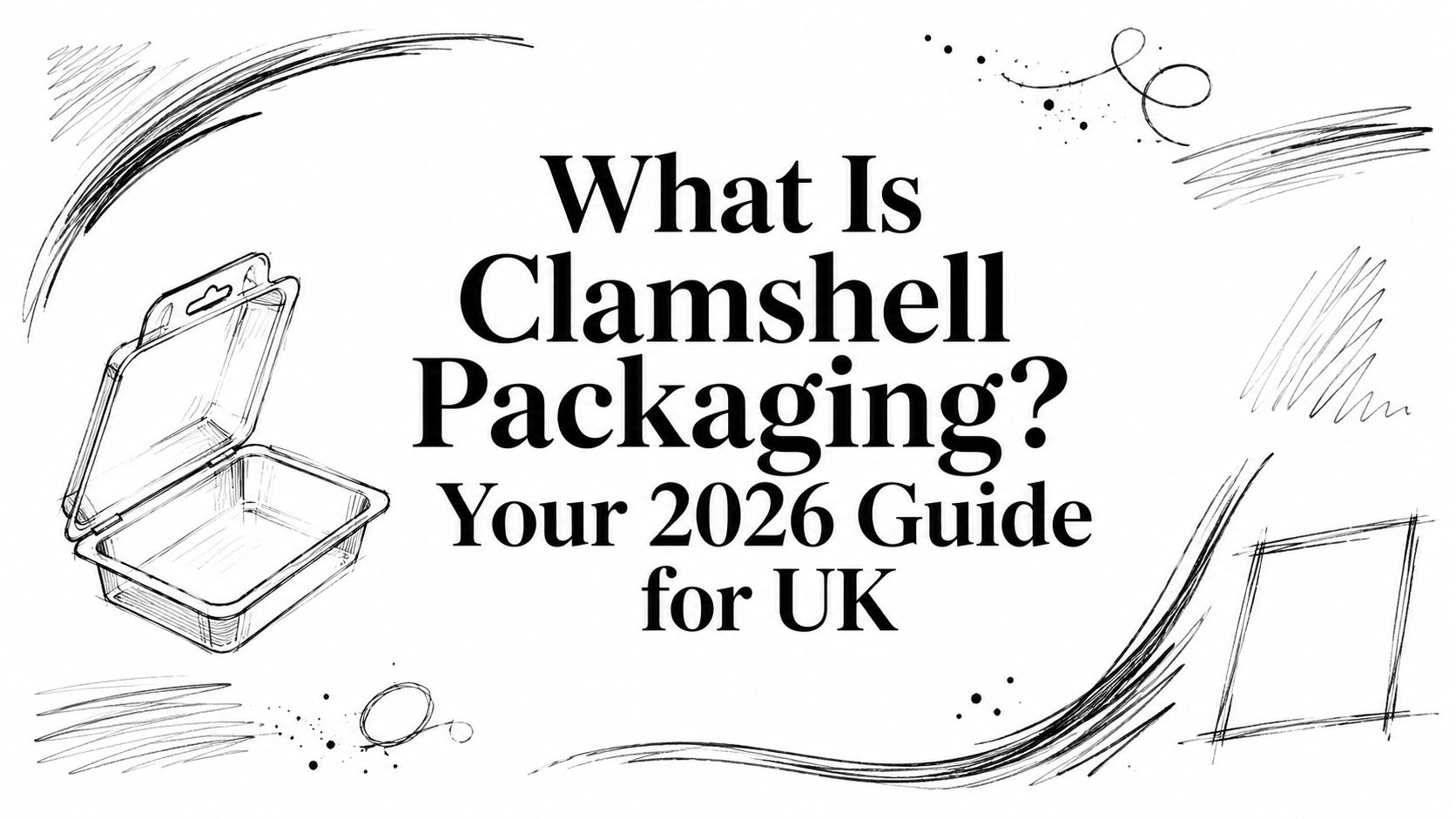
Clamshell packaging is a one-piece container consisting of two halves joined by a hinge, allowing it to open and close like a shell. It matters to UK food businesses because households generated about 5.6 million tonnes of packaging waste in 2022, and packaging made up around 44% of household plastic waste by weight in England, so even everyday choices like sandwich wedges, salad boxes, and takeaway meal packs now sit under much closer scrutiny.
If you're choosing packaging for a café, bakery, deli, or takeaway, you're usually not asking for a textbook definition. You're trying to work out whether a clamshell will keep food intact, show it off properly, survive delivery, and still make sense once recycling rules, material costs, and tax pressure enter the conversation.
That's where clamshells become more than “a box with a lid”. In practice, they sit right at the point where presentation, protection, and compliance meet. A clear PET clamshell can make a fresh salad look premium. A fibre clamshell can suit hot food better if your priority is moving away from virgin plastic. But the wrong choice can leave you with condensation, soggy chips, cracked lids, leaking grease, or stock that customers can't recycle locally.
What Defines Clamshell Packaging
A busy lunch service makes this definition practical very quickly. If staff need to box food fast, keep it presentable in the display, and avoid chasing separate lids across the counter, a clamshell is often the format they reach for.
A clamshell is a single-piece rigid pack with a base and lid joined by an integrated hinge. It opens and closes as one unit, which is the key feature that separates it from a tray, tub, or bowl with a separate lid.
That built-in hinge matters in daily use. Staff can close the pack one-handed, stack it more neatly, and move it through service with fewer loose parts. In a small café, that saves time. It also cuts the usual annoyance of mismatched bases and lids during a rush.

The shape does the work
The format works because the container itself provides structure. The walls, lid, and hinge share the load, so the pack resists crushing better than a film wrap or a lighter carton in many retail and takeaway settings.
That is why clamshells turn up across both clear plastic and fibre formats. A PET clamshell gives visibility and a firmer snap-close feel, which suits chilled grab-and-go food and products sold on appearance. A fibre clamshell usually gives up that product visibility, but it can be the better fit for hot food, grease handling, and businesses comparing eco-friendly takeaway container options against plastic use, packaging tax exposure, and customer expectations.
In the UK market, that distinction matters. A pack can be technically sound and still be the wrong buying decision if it creates problems with local recycling acceptance, adds unnecessary plastic tax cost, or performs poorly with the food you sell.
Fit matters more than the label on the carton
A clamshell only works well if the cavity suits the product properly. Buyers often focus on the quoted dimensions, but real fit depends on the food at its highest point, widest point, and messiest point once filled.
If the lid presses onto icing, garnish, or a sandwich crown, presentation is lost before the customer opens it. If there is too much empty space, the food shifts in transit. If the closure strains at one edge, the pack is more likely to spring open in delivery bags.
Practical rule: Buy for the food at its most awkward point, not its neatest point on the prep bench.
I usually advise café owners to test clamshells with a fully packed product, not a dry sample shell held in the office. That is where the trade-off shows up. The right clamshell protects the food, closes cleanly, and suits your service style. The wrong one creates daily waste, untidy displays, and complaints that have nothing to do with the food itself.
A Guide to Clamshell Materials
Material choice is where the simple question of what is clamshell packaging becomes a business decision. In the UK, that decision matters because households generated about 5.6 million tonnes of packaging waste in 2022, and packaging represented around 44% of household plastic waste by weight in England. That's one reason businesses are reassessing high-volume formats such as takeaway containers under growing policy pressure, including Extended Producer Responsibility, as noted in this packaging waste reference.
The main materials you'll see
Most food businesses are choosing between clear plastic clamshells and fibre-based clamshells. Each has a place. Neither is automatically right for every menu item.
PET and rPET are the standard choice when you need clarity. If you want customers to see a layered salad, decorated cake, fresh berries, or a premium sandwich filling, clear rigid plastic still does that better than fibre. It also gives good stiffness and a neat shelf appearance.
Bagasse and paper-based clamshells are usually chosen when the priority is reducing reliance on conventional plastic, especially for hot takeaway food. They suit operators who want a more natural look and a format that aligns better with broader eco-focused packaging goals. If you're comparing broader category options, Chef Royale's overview of eco-friendly takeaway containers is useful for seeing where clamshells fit among other food-to-go packs.
Clamshell material comparison
| Material | Heat Tolerance | Grease Resistance | Clarity | Eco-Friendly Credential |
|---|---|---|---|---|
| PET | Good for cold and ambient food. Less suitable where high heat retention is the priority | Generally good for many cold and prepared foods | Excellent | Recyclable in the right local system |
| rPET | Similar practical performance to PET for visible food packs | Generally good | Excellent | Includes recycled content |
| Bagasse | Better suited to hot takeaway applications | Can work well, but performance depends on the food | Opaque | Fibre-based alternative to plastic |
| Paperboard | Useful for lighter or less messy items | More limited if food is greasy or wet unless designed for it | Low | Fibre-based option |
| PLA-style bioplastic clamshells | Application-specific | Application-specific | Often clear | Alternative material, but disposal needs checking locally |
What works well and what doesn't
Clear PET works well for display-led foods. It doesn't hide the product, and that matters when appearance sells. A colourful pasta salad in an opaque box loses impact immediately.
Fibre clamshells work well for many hot foods, especially where visibility isn't the selling point. Burgers, toasties, chips, and bakery items that don't need to be seen before opening often suit bagasse better than clear plastic.
If the product needs to be viewed before purchase, clarity usually wins. If it needs to hold heat and support an eco-led brand position, fibre often makes more sense.
Where buyers get into trouble is assuming “greener” always means “better”. Some fibre packs won't handle grease, steam, or weight as well as expected for every menu item. Some clear plastic packs look excellent in the fridge but trap condensation if hot food goes in too soon. The best choice depends on the food, the service style, and what happens after the customer leaves with it.
Common Uses in Foodservice and Retail
Clamshells show up across foodservice because they solve a practical problem. They protect the product while still making service quick. That's one reason the global clamshell packaging market was valued at USD 8.9 billion in 2023 and is projected to reach USD 15.54 billion by 2034, while food clamshells in retail are forecast to grow 3.6% per year. The demand is tied to convenience foods, supermarket display, and takeaway meals, according to this clamshell packaging market analysis.
Cold food that needs to sell visually
For chilled display, clamshells are hard to beat. Salads, pasta pots, cut fruit, bakery slices, and deli items all benefit from a rigid clear format that keeps ingredients visible and protects the shape of the food.
A sandwich wedge can work in another pack style. A layered salad with toppings usually looks better in a clear clamshell because the customer can judge freshness instantly. Bakeries use the same logic for cupcakes, traybakes, and pastries that would get marked or flattened in softer packaging.
Hot takeaway where protection matters more than visibility
For cooked food, the use case shifts. Burgers, chips, grilled items, breakfast baps, and loaded fries often go into fibre clamshells because the customer doesn't need to inspect every detail through the lid. What matters more is whether the pack holds shape, stacks in a delivery bag, and copes with warmth and grease.
Consequently, many new operators overvalue appearance and undervalue transit. A clear pack may look modern, but if a hot item sweats heavily or softens the product on the journey, the visual gain isn't worth it.
It's not just for food
Clamshells also appear in retail beyond cafés and takeaways. Gift sets, deli merchandise, produce, and non-food items use the same format for one basic reason: the pack shows the contents while giving them a fixed cavity and a cleaner shelf presence.
That's why the format also appears outside mainstream catering. If you want a non-food example of how the structure works for portioned, visible items, the Loyaltie wax melt collection is a useful reference. It shows how clamshells are used when presentation, separation, and protection all matter at once.
A clamshell is strongest when the product benefits from both containment and display. If you don't need one of those two things, another pack style may be cheaper and simpler.
Key Benefits and Practical Drawbacks
The appeal of clamshell packaging is straightforward. It protects well, closes fast, and can make food look more premium. But every benefit comes with a trade-off, and that's where buying decisions get more realistic.

Where clamshells earn their keep
Protection is the obvious strength. Rigid walls help prevent crushing, so clamshells suit fragile bakery lines, prepared foods, and products that travel in stacked bags or display cabinets.
The trade-off is bulk. Rigid packs take up more room in storage than flat wraps, sheets, or flexible bags. A small site with limited back-of-house space feels that quickly.
Visibility is another major advantage, especially with PET and rPET. Customers can see freshness, portion size, and product quality before they buy.
The trade-off is condensation and presentation risk. Put hot food into the wrong clear clamshell too early and the inside can mist up fast. Food may still be safe, but it can look less appetising.
The operational pros and cons
Fast packing: Staff can pack and close clamshells quickly during a rush.
Trade-off: If the hinge or closure isn't durable, repeated handling can lead to split tabs or lids that don't stay shut properly.Easy stacking: Many clamshell designs stack neatly in fridges, display shelves, or collection counters.
Trade-off: Not every design stacks safely once filled. Tall toppings, domed lids, or uneven loads can make stacks unstable.Tamper awareness: A closed clamshell gives a visible sense that the pack has been shut and not casually handled.
Trade-off: It's not the same as a fully sealed pack. If your delivery model needs stronger tamper control, you may still need labels or seals.
The best clamshell isn't the one with the nicest catalogue photo. It's the one that still performs after prep, stacking, holding, bagging, and delivery.
Cost and perception
Clamshells can be cost-effective in day-to-day use because they combine base and lid in one format and simplify packing. For many operators, that labour convenience matters as much as the pack price itself.
The drawback is that material perception can shape customer response. A clear plastic clamshell may show the food beautifully, but some customers immediately see plastic first and product second. A fibre pack can support a greener brand impression, but if it leaks or softens, that goodwill disappears quickly.
In short, clamshells are rarely a bad format. They're just easy to buy badly.
Choosing the Best Clamshell for Your Business
A new café often reaches this decision faster than expected. One supplier offers a cheap clear plastic clamshell that makes cakes and salads look sharp in the chiller. Another offers fibre packs that fit a greener brand message and may help you respond to policy pressure such as England's new plastic ban. The right choice depends on what you sell, how you serve it, and what failure will cost you on a busy day.
Plastic versus fibre is not a branding decision alone. It is a performance decision with tax, recycling, storage, and customer perception tied to it. Virgin plastic can create tax exposure under UK Plastic Packaging Tax rules if the recycled content threshold is not met. Fibre can reduce dependence on conventional plastic, but the wrong board or moulded pulp pack can soften, wick grease, or trap steam in ways that hurt the food.

Start with the product itself
Begin with the item you are packing at its real serving condition, not the product spec on paper.
Ask these four questions:
Will the food sit hot, cold, or change temperature in the pack?
Clear PET or rPET often suits cold cabinet lines where visibility drives sales. Hot food tends to work better in fibre clamshells, especially where condensation would fog a clear lid.Does visibility help you sell more of it?
For sliced cake, salads, pastries, and fruit pots, the answer is often yes. For burgers, chips, toasties, and loaded fries, presentation matters less than heat hold and structure.What is the mess risk?
Grease, sauce, steam, and height are the details that expose weak packs fast. A neat-looking clamshell on an empty sample can fail once the food is fully dressed and handed to a courier.What disposal route will your customer have?
In the UK, that answer is rarely simple. Some plastic clamshells are technically recyclable but not accepted consistently by local authorities, and fibre packs with linings or heavy food residue can create their own disposal problems.
Compare failure cost, not just unit cost
I advise buyers to price the pack against the cost of something going wrong. If a cheaper clamshell causes one leaking order, one crushed cake, or one refunded delivery, the saving on the box disappears quickly.
A practical shortlist looks like this:
- Choose clear plastic clamshells for products that need visibility, strong shape retention, and a clean shelf presentation.
- Choose fibre clamshells for hot takeaway food where breathability, heat handling, and lower reliance on conventional plastic matter more than product display.
- Check recycled content and tax implications before committing to plastic. A low purchase price can look less attractive once packaging tax exposure is factored in.
- Measure the filled product properly. Include toppings, garnish, and lid clearance.
- Run a live trial using your actual service pattern. Fill the pack at real temperature, hold it for the normal collection window, stack it, bag it, and send it out.
For larger hot portions, a product such as this bagasse clamshell biodegradable 229x229mm 9×9 shows the type of fibre format many operators test first.
A practical buying checklist
Use this before placing a bulk order:
- Closure feel: Open and shut the pack several times. The tab should stay consistent across the case, not vary from one unit to the next.
- Steam control: Pack hot food, close it, and leave it for the same hold time your customers experience. Check whether the food sweats, softens, or loses texture.
- Grease resistance: Test with your oiliest menu item, not your driest one.
- Shelf and stock space: Hinged packs save assembly time, but they can take up more room in storage than flat-packed alternatives.
- Brand fit: Plastic can look premium and product-led. Fibre can support a more natural takeaway feel. Neither helps if the pack underperforms.
- End-of-life message: Staff need a clear answer when customers ask, “Can I recycle this?” If the answer depends on local collection rules, train the team to say that plainly.
One final buying tip. Order samples in two materials if you are undecided. Side-by-side testing with your own food gives a better answer than any catalogue description.
Clamshell Packaging FAQs for UK Businesses

Can clamshell packaging be recycled in the UK
Sometimes yes, sometimes no. That's the honest answer.
Acceptance depends on the local council and the type of plastic, and many local authorities still reject food-contaminated plastics and some thermoformed items. That means the same PET clamshell may be accepted in one area but rejected in another, which is why disposal causes so much confusion for both businesses and customers, as explained in this discussion of clamshell recycling in the UK context.
If you're running a food business, don't print broad recycling claims on menus or signs unless you've checked what applies in your customers' areas. For multi-site operations, that matters even more.
Are fibre clamshells always the better environmental choice
Not automatically. Fibre-based packs can be a strong option, but only if they suit the food and the waste route available to the customer or site. If the container fails in use and the meal is damaged, the packaging decision hasn't worked well in practice.
A better question is this: does the pack fit your food, your service model, and your waste-handling reality? If the answer is no, the material swap may create more problems than it solves.
How do I stop hot food making the clamshell soggy or steamy
Start with food type and hold time. Steam-heavy food needs more care than dry bakery items. Don't judge the pack straight from the prep line. Judge it after the time it will spend closed.
Use simple trials:
- Pack it at real temperature: Don't test with cooled food if customers receive it hot.
- Leave it closed for the actual journey time: Counter service and delivery need separate checks.
- Watch the base and corners: That's often where moisture or grease failure shows first.
- Review the food itself: Sometimes the issue is overfilled sauce, not the container.
Should cafés choose clear plastic or bagasse for food-to-go
Choose according to the product's selling point.
If customers buy with their eyes first, clear plastic usually performs better. If the product is mainly hot, handheld, and eaten soon after purchase, bagasse often makes more operational sense. Businesses that are reviewing broader sustainability-led options can compare categories through biodegradable food packaging in the UK.
Do UK policy changes affect clamshell choices
Yes, and they're making packaging decisions less casual than they used to be. If you want a straightforward summary of the wider policy direction affecting operators, this overview of England's new plastic ban is a useful starting point alongside your own supplier and waste guidance.
What's the biggest mistake new operators make
They buy based on appearance alone.
A neat-looking sample on a desk tells you very little. Test it with your actual menu, your actual prep staff, your actual service speed, and your actual customer journey. That's where you find out whether the clamshell supports the business or just looks good in a catalogue.
If you're comparing clamshell options for hot food, cold display, bakery lines, or wider food-to-go packaging, Monopack ltd gives UK businesses a practical place to review packaging formats, pack sizes, and eco-focused alternatives without losing sight of day-to-day cost control.


