


Types of Food Wrap: Which to Use and When

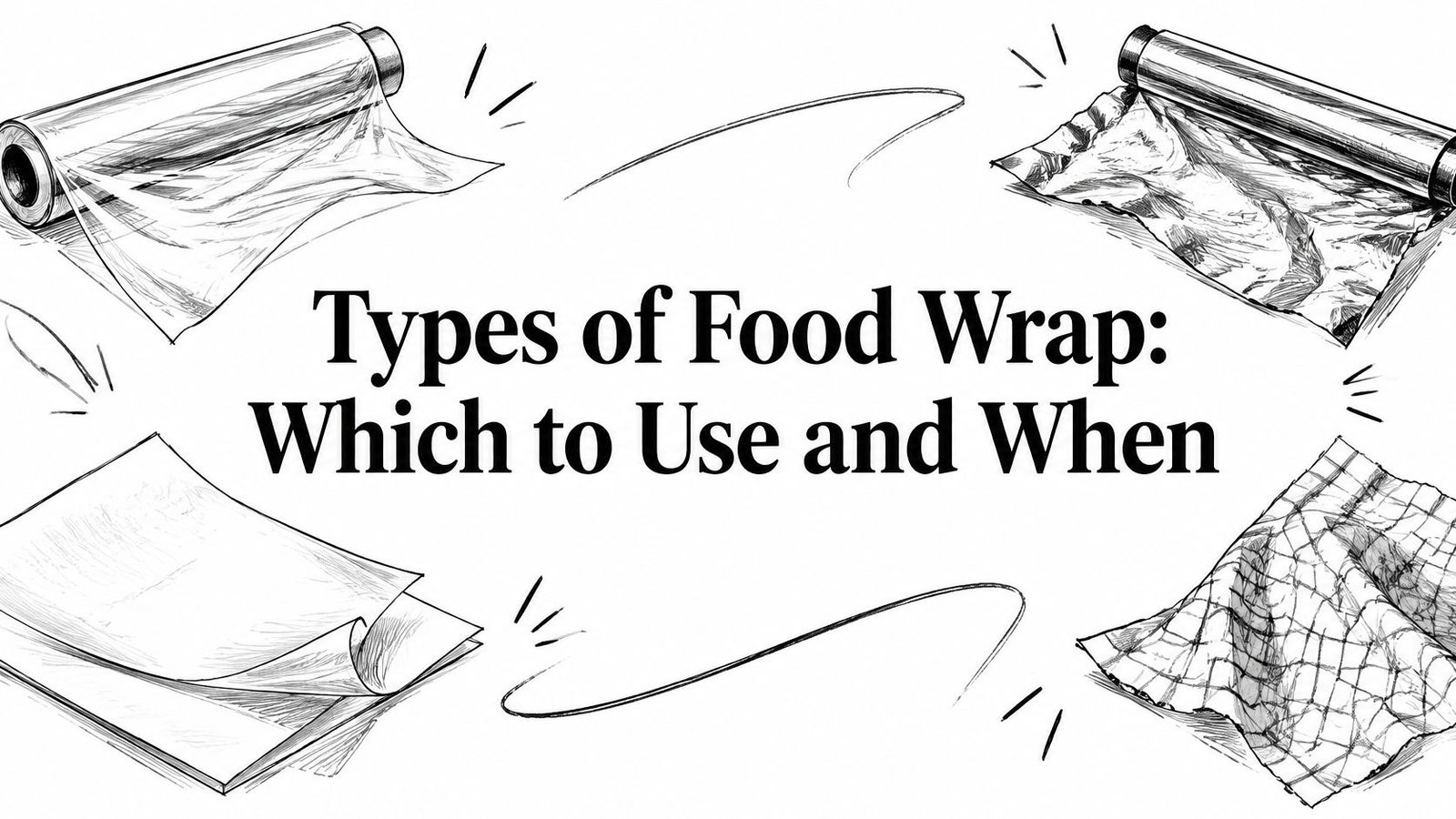
Which wrap would you put round a bowl of hot soup going out for delivery, and which would you put over a tray of roast potatoes heading for the oven? Most kitchens answer both questions with whatever roll sits closest to the pass, then find out at the end of service that the wrap has fogged, sagged or welded itself to the food.
The gap in that thinking is the product name. Cling film, aluminium foil, greaseproof paper and compostable film aren't four versions of one thing. Each is a different trade-off between heat resistance, barrier protection and disposal route, and the job in front of you decides which of the three matters most.
That's the rule this guide works from. Learn what each wrap can take, where it fails and where it goes after service, and the brand names stop mattering. A fourth route, reusable covers, sits alongside the disposables and wins on cost per use wherever the same bowl gets covered every day.
Food Wrap Types at a Glance
A busy kitchen needs an answer in seconds, so start with families rather than brands. Plastic film covers cling film and the thicker stretch film used on stored stock. Aluminium foil covers plain foil and the laminates bonded to paper or plastic. Paper covers greaseproof, baking and kraft. Plant-based film covers compostable and regenerated cellulose options. Reusable covers sit alongside them for the jobs that repeat daily.
| Wrap type | Main material | Best use | Heat or oven limit | UK disposal route |
|---|---|---|---|---|
| Cling film | Polyethylene plastic film | Covering bowls, cut fruit, cheese and sandwiches | Microwave only where the pack says microwave-safe | General waste, or a film collection point where one exists |
| Stretch film | Polyethylene or PVC film | Bulk and pallet wrapping of stored food | Not for heating | Limited film collection |
| Aluminium foil | Aluminium | Roasting, hot holding and hot takeaway portions | Oven and grill safe | Metal recycling if clean and unlaminated |
| Greaseproof paper | Paper with grease resistance | Pastries, burgers and cakes | Not for oven use unless the pack rates it | Paper recycling if clean and free of grease |
| Baking paper | Paper with silicone coating | Lining tins and trays, cooking en papillote | The limit printed on the pack governs | Often general waste; check local rules |
| Kraft paper | Unbleached paper | Sandwich wraps, deli paper and dry goods | Not for oven use | Paper recycling if clean |
| Compostable film | Plant starch (PLA) or cellulose | Cold bakery items and short-shelf-life foods | Usually not for heat | Industrial composting only |
Read the table in two directions. The heat column answers whether a wrap can go near an oven, a grill or a microwave at all, and it's the column that prevents the expensive mistakes. The other columns carry barrier performance and disposal, which decide whether a wrap holds grease, keeps a sandwich from going soggy, or lands in general waste even when the pack carries a recycling mark.
Cling film grips a bowl and stays clear. Foil takes oven heat and blocks light. Kraft paper breathes so bread doesn't sweat. Those are three different jobs, and no single roll does all three well. What follows takes each family in turn, then ends with a matching guide for the food in front of you.
Plastic Cling Film and Stretch Film
Cling film is the wrap that behaves like a second skin. Press it against the rim of a bowl and it grips, so an odd-shaped dish or a half-cut melon gets a seal without hunting for a lid. That conformability is the whole point: it holds in moisture, slows drying, and lets a customer see what they've bought.

Cling film, stretch film and the plastic question
These two are cousins with different jobs. Cling film comes on a narrow roll for the kitchen and is thin enough to cling to itself and to a plate. Stretch film is thicker, usually wider, and built for bundling stored stock: trays of portioned desserts, containers going into the walk-in, pallets waiting for dispatch. Stretch film isn't a customer-facing covering and it isn't for heat.
Most catering cling film sold now is polyethylene, which is softer and more forgiving than the older PVC films. PVC still exists and clings harder, but it carries a different waste story. Check the pack for the material before committing to a case, because the two behave differently at end of service and your supplier should tell you which one you're buying.
Heat, allergens and the recycling reality
Microwave use has one rule. Film goes in only if the label says microwave-safe, and it stays clear of the food surface. Fat heats faster than water, so film touching the top of a rich sauce will soften and fail. Leave a gap, or cover the bowl with a plate instead.
The regulatory side catches people out. For items pre-packed for direct sale, a wrap that fully or partly encloses food that can't be altered without opening it can trigger mandatory allergen labelling, which matters for individually wrapped cakes and sandwiches. Food-contact suitability is material-specific too, so hold written confirmation from the supplier rather than assuming any clear film is neutral.
Recycling is where film looks weakest. UK government reporting classifies cling film as flexible plastic packaging and records film packaging at only an 8.0% recycled-content level in 2024, against 43.7% for plastic bottles, as set out in the guidance on what to report for packaging under extended producer responsibility. Thin, contaminated film is hard to collect, sort and reprocess economically, so the gap sits with the material, not with staff laziness at the bin.
Practical rule: use film where direct contact, a tight seal or visibility earns its keep, and keep it clean and free of food so it has a chance of collection rather than certain disposal.
Here's how that plays out in a working kitchen:
Aluminium Foil and Its Laminates
What should a wrap do first: withstand oven heat, block light, or simplify disposal? Aluminium foil can handle heat and block light and oxygen, but its end-of-life route depends on whether it is plain or bonded to another material.

Plain foil versus laminates
Plain foil is a single metal sheet. Laminated foil combines metal with paper or plastic to add features such as print, stiffness or a heat seal. The extra layer may make the pack harder to recycle, especially when the materials cannot be separated before disposal. For easier material recovery, choose plain foil where the job allows it, and check local collection rules rather than assuming every foil pack follows the same route.
Foil suits roasting, hot takeaway portions and tasks where a light and oxygen barrier matters. For a heavy item, choose a thicker gauge: it is less likely to tear at the corners when a full container is lifted. This is a practical choice, not a reason to use more material than the task needs.
Where foil goes wrong
Two handling mistakes can spoil the result. Avoid reusing foil that has held raw meat or acidic food, and follow the manufacturer's intended-use guidance. Salty or acidic foods left against bare foil for a long time can pit the metal and affect taste. For tomato-heavy dishes, citrus dressings or long-marinated meat, put a suitable paper layer between the food and foil, or choose another wrap.
End-of-life performance is another part of the choice. Clean, plain foil can enter metal recycling where local services accept it; food residue and bonded layers can complicate that route. The final evaluation of the plastic packaging tax assesses the tax, not foil recyclability, so it does not establish a specific recycling rate or foil-lamination threshold.
Practical rule: choose foil when heat or light protection matters, and check whether the pack is plain or laminated before deciding how to dispose of it. For food that does not need foil's heat resistance or barrier, use a wrap suited to its moisture, grease and holding time.
Greaseproof, Baking and Kraft Papers
Paper wraps get muddled because three products share one shelf and one word. Each solves a separate problem, and the wrong one shows up within minutes.
Greaseproof paper is treated to resist oil and fat, which is why it suits pastries, burgers and cakes that would otherwise print a grease ring through a bag. It isn't baking paper and shouldn't be trusted in a hot oven unless its own pack says so. For a closer look at how the treatment works and what it's rated for, the guide to what greaseproof paper is covers the difference in plain terms.
Baking paper carries a silicone coating, so it releases cleanly and lines tins and trays. It's the right choice for a tray of roasted vegetables or fish cooked en papillote, always within the oven limit printed on the box. Kraft paper is the plain one: unbleached, breathable, good for a baguette at the lunch trade, deli paper between slices, or a liner for dry goods. It offers almost nothing against grease or heat.
Where paper fails is wet or long-held food. A burger sits for two hours and the grease soaks through. A hot, saucy portion turns the sheet soft and it collapses in the bag. An open baguette in kraft stays crisp far longer than one sealed in film, because the paper lets steam escape.
Rule of thumb: match the paper to the fat and moisture level of the food before you match it to the price. Test one holding time on your own counter before switching a whole range.
Clean paper is generally easier to recover than plastic film. Greasy or coated paper usually isn't, so check what your local collection takes rather than assuming the recycling symbol settles it.
Compostable and Plant-Based Wraps
Compostable sounds like a disposal instruction. It isn't one. Most plant-based films need the sustained heat of an industrial composting facility, and they won't break down in a garden bin, a wormery or a landfill cell, where conditions are wrong and the material remains there.
The family is broader than shop shelves suggest. Plant starch films made from PLA, regenerated cellulose film and coated papers all sit under the label. Look for a recognised standard such as EN 13432 printed on the pack, then confirm with your council or waste contractor that the route exists in your area before buying a case. Compostable cling wrap made for home kitchens, such as Wallaby Wellness eco kitchen essentials, deserves the same two questions: which standard, and which bin.
These wraps work where the food is cold and short-lived. A croissant sold at the counter, a pastry eaten the same day, cut fruit held for a morning, a cold sandwich: all sensible fits, because the wrap has to last hours rather than days.
They fail on heat and fat. Many plant-based films soften at modest temperatures, so a compostable wrap over a hot roast is a poor pairing, and fatty food held for hours can break the film down before service ends. Price is the third constraint, and you should expect to pay more per metre than for cling film.
Test one batch on your own counter before switching a range, and label the bin staff use for the used wrap. A compostable film dropped into general waste undoes most of the reason for buying it.
Reusable Wraps and Covers
A reusable cover competes with cling film on cost per use, not on sticker price. Where the same bowl gets covered twice a day, a lid pays for itself inside a month. Where it touches raw meat or goes near a microwave, it doesn't justify the switch at all.
Beeswax wraps are cotton cloth coated in beeswax, jojoba oil and resin. The warmth of your hands moulds them over a bowl, a wedge of cheese or a cut avocado, and they suit fridge storage well. Wash them in cool water with mild soap, and keep them away from raw meat, hot food, the oven and the microwave, because heat melts the coating and the wrap stops sticking.
Silicone stretch lids pull over bowls, cups and tins and last for years. They seal better on a rigid rim than on loose food, they don't resist grease well, and they go in the microwave or dishwasher only where the maker says so. They're the strongest of the three for batch storage in a prep fridge.
Cloth covers keep dust and flies off a proving dough or a resting joint without sealing anything. They're cheap, washable and honest about their limits.
Disposal is the weak point. Worn beeswax wraps and cloth usually go in general waste rather than recycling, and silicone is rarely accepted in household collections, so check the maker's guidance and your local rules. If you're weighing a reusable route against film for a specific job, this comparison of a cling film alternative sets the options side by side.
Cost check: count the uses you'll realistically get from one cover in a month, then divide the price by that number. A wrap used ten times is an expensive cover; one used every day for a year is the cheapest thing in the drawer.
Recycling and Compliance Checks Before You Buy
How do you know whether a wrap can be recycled after use? Start with material-level figures, then check whether the product and your local collection match. The UK government's statistics on waste report these packaging waste totals and recycling rates for 2024:
| Material | Packaging waste (thousand tonnes) | Recycling rate |
|---|---|---|
| Paper and cardboard | 4,838 | 84.1% |
| Metal (including aluminium) | 682 | 78.7% |
| Aluminium | 238 | 65.9% |
| Plastic | 2,156 | 53.5% |
Use these figures as a broad comparison, not as a score for an individual wrap. A paper wrap with a plastic window, or foil bonded to film, is a mixed material and may not follow the rate for paper or metal alone. Food residue can also affect whether packaging is accepted. Different government publications may measure different things, so rates give context rather than a precise prediction for your used wrap.
What to check before a bulk order
- Declaration of compliance. Ask for written confirmation that the wrap is suitable for food contact. Regenerated cellulose film is regulated as its own material, so paperwork for polyethylene does not automatically cover it.
- Pack limits. Check the oven or microwave rating and material code on the packaging. A marketing description is not a substitute for the product's stated limits.
- Local collection. Confirm that your council or waste contractor accepts the material before ordering in bulk.
- A trial run. Test the wrap with a real order, including the time the food spends in transit and on display.
A recyclable label describes the material's potential, not a guarantee that it will be collected locally. Contamination and mixed layers can change the disposal route, so check how to sort the packaging using this guide to recycling food packaging. For businesses reporting packaging data, accurate material codes help keep records aligned with the packaging being used. The SIX ERP blog on PPWR discusses packaging data in relation to ERP systems.
Matching the Wrap to Food and Task
Five questions settle most wrap decisions before price enters the conversation.
- How hot is the food? High heat points to foil, not film.
- How wet or greasy is it? Grease loosens an adhesive cling and soaks straight through plain kraft.
- How long will it be held? Longer storage needs a tighter, stronger seal.
- Does the customer need to see it? Visible contents favour clear film.
- Where will the wrap end up? The disposal route decides what's acceptable in the first place.

Three steps turn those answers into a buying decision:
- Sort the food into hot, cold or greasy.
- Pick the wrap from the matching row below.
- Score that wrap against heat, moisture and grease, shelf life, visibility and disposal, then confirm the pack's oven or microwave limit and its recyclability before ordering a case.
| Food or task | Best wrap | Why it works | Avoid |
|---|---|---|---|
| Hot roast meat for takeaway | Unlaminated aluminium foil | Holds heat and blocks light and oxygen | Plastic film, which can soften under heat |
| Cut fruit, cheese and cold leftovers | Cling film | Clings tightly and limits drying | Plain kraft paper, which lets air through |
| Cold sandwiches for lunch trade | Kraft or greaseproof paper | Plain, breathable and easy to fold | Foil, which traps steam and makes bread soggy |
| Greasy pastries and burgers | Greaseproof paper | Treated to resist oil and fat | Plain kraft paper, which soaks through |
| Reheating in the microwave | Microwave-labelled cling film | Vents safely and stays on the container | Aluminium foil, which must stay out of the microwave |
| Baking in tins and trays | Baking paper | Stands up to oven heat within the label limit | Cling film, which melts in the oven |
Read the Avoid column first, because that's where the costly errors live. Foil in a microwave arcs and scorches. Cling film in an oven slumps over the food and fuses to the tin. Plain kraft under a greasy pasty prints a translucent patch through the bag by the time the customer reaches the office.
Say a café sells cold sandwiches at lunch and hot bacon rolls at breakfast. The sandwiches want kraft or greaseproof paper: breathable, foldable, and cheap enough to wrap by hand at the counter. The rolls want unlaminated foil, which holds heat for the walk to the park. That's two wraps rather than one, and buying both from a single supplier keeps stock, invoicing and staff training simple.
Our own Aluminium Products range covers foil, foil containers, platters and pots, and the Bio-Degradable range covers bagasse pots, plates, trays, fish and chip boxes and bowls, so a site selling hot and cold food can pair the foil for the rolls with a bagasse tray for the salads on one order.
Request product sheets that state heat limits and food-contact compliance, and compare cost per wrap across pack sizes rather than cost per roll. The cheapest wrap isn't the lowest cost if it fails during a delivery run.
Pick one wrap for your most common food this week. Test it across a single holding period, note where it fails, then widen the range. Two wraps chosen deliberately beat six chosen by habit.
If you're buying wraps by the case, Monopack ltd stocks the four families side by side: cling film, aluminium foil plus foil containers and platters, kraft and greaseproof papers, and bagasse trays, pots and boxes for cold service, so one order covers a menu that runs hot and cold. Pack sizes start at 25 pieces and go up to trade cartons, with UK-wide delivery and free shipping on orders over £50. Visit Monopack ltd to match the wrap to the job before your next menu change.


